This article is the first of a 4-part series called Introduction To Church Constitution And Confessions.
See also:
Part II: The Great Confessions of the Reformed Tradition
Part III: Adopting and Adapting the Westminster Confession Faithfully for 2026
Part IV: Other Constitutional Matters
Please also note that the proposed constitution has been further developed to achieve what is discussed in this post, by adopting the 39 Articles of Religion and the London Baptist Confession as well as the Westminster, while clearly allowing discretion in matters of conscience where these confessions conflict, and emphasising that which is held in common, while broadly honouring and not condemning the wider content of the confessions. You can read more about this in the article Stratford Church Plant 2026: Constitution.
STRATFORD CHURCH PLANT 2026
INTRODUCTION TO CHURCH CONSTITUTION AND CONFESSIONS
SPECIAL GENERAL MEETING FOR CONSTITUTION OF NEW CHURCH PLANT FOR STRATFORD
Tuesday November 11, 7:30pm
HE’S BEEN IN A GOOD PADDOCK… (PART I of IV)
A new church for Stratford in 2026
Today I want to draw your attention to some great news for our wonderful town of Stratford, here in the heart of Taranaki – Stratford is getting a new church!
Hallelujah, indeed! Because, really I don’t think that in this day and age you can have too many churches!
After spending 20 years of my life in big churches, over the last 5 or 6 years my wife and I have come to love small church life.
Churches don’t need to be massive – small churches can be great. Big churches can be great too. But what really matters isn’t quantity, but quality.
And this is why you can’t really have too many churches in a town like Stratford, in 2026. There is always room for another church – especially if it is a church that is going to be interested in quality.
Jesus was always more interested in quality than quantity. He very famously told those who were following him, “Unless you eat the flesh of the Son of Man and drink his blood, you have no life in you.” And the bible says that as Jesus began to preach in this way many of his disciples turned back and no longer followed him (John 6:35 – 66).
In 2026, Stratford will be getting a new church that knows what it is to feed on Christ.
Planting
When I advertised meetings for a new “church plant” on the Stratford Banter Facebook group last month, the question was duly asked, “What is a church plant?!”
A definition from Google was provided by another member of the public;
“A church plant is a new Christian community established to spread faith in a new area, with the ultimate goal of creating a self-sustaining and reproducing community of faith.”
In the Bible, Jesus describes the church as a tree. He says, “I am the vine; you are the branches. If a man abides in me and I in him, he will bear much fruit” (John 15:5).
A church plant is an initiative with the goal of putting down a new set of spiritual roots into the soil, built on a foundation of faith in Christ, to become a self-sustaining community of faith that can be fruitful over a long period of time.
A faithful church plant is propelled by the life, love and power of Jesus Christ himself, as we come to the cross and recognise Jesus’ death as the one perfect sacrifice for the sins of the world.
When we put our faith in Christ and in his loving sacrifice, he imparts to us his very spirit, so that we can show the same kind of love that Jesus showed in the self-giving sacrifice of the cross.
For the church plant planned for 2026, work is being done to prepare the ground, to test the soil. Many conversations have been had. Meetings have been held to discuss the principles and concerns driving the new church plant. Various venues for meetings are being considered. Formats and patterns for church life are being discussed.
Fencing
I learned from a good friend this week that grapevines don’t actually require great soil to be fruitful. What they need is regular care and protection, and good access to sunshine. They need to be well pruned, and kept from destruction from the elements.
In Stratford, we don’t know much about making wine. We know much more about producing red meat and dairy. And while farming benefits from great soils, to be optimal, pasture also needs regular care, fertiliser, protection from pests, and good grazing practices. And it is impossible to keep pasture in this way without a good fence.
It always makes me chuckle when I think of grandpa’s face lighting up at the sight of a bonny curly-headed toddler, as he says, “He’s been in a good paddock!” It is Jesus’ intent to put his sheep in a good paddock.
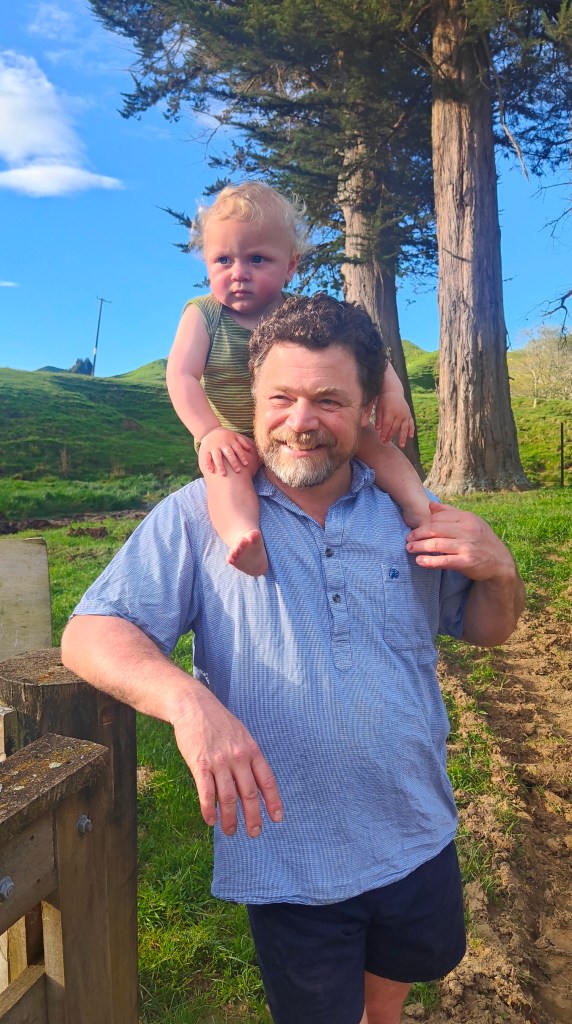
Jesus says in John 10:14 & 15; “I am the good shepherd; I know my sheep and my sheep know me – just as the Father knows me and I know the Father–and I lay down my life for the sheep.”
Psalm 23 says;
“The LORD is my shepherd, I shall not be in want. He makes me lie down in green pastures, He leads me beside quiet waters, He restores my soul. He guides me in paths of righteousness for His name’s sake.
Even though I walk through the valley of the shadow of death, I will fear no evil, for you are with me; your rod and your staff, they comfort me. You prepare a table before me in the presence of my enemies. You anoint my head with oil; my cup overflows. Surely goodness and love will follow me all the days of my life, and I will dwell in the house of the LORD forever.”
A successful church plant will likewise produce spiritual sons and daughters whose faces glow, as evidence that the good shepherd has indeed led them to good pasture (2 Corinthians 3:18).
The main point of the four information meetings held last month was to discuss the importance of establishing clear boundaries, so that those who come will be able to truly feed on Christ. To talk about giving attention to detail, and establishing patterns of care, that can help to make this new church plant in 2026 a success.
That means being genuinely willing to engage with and obey all of scripture – not just the bits that we like. That means taking seriously the need to articulate and defend good doctrine. And it means being willing to engage with the great confessions that have set out the core beliefs of the Christian faith, and helped the church go from strength to strength through the ages.
Meeting Tuesday November 11, 7:30pm
This Tuesday, November 11, at 7:30pm, I will be hosting another meeting at the Stratford A&P Showgrounds on Flint Road, in the old Skinner Road hall at the entrance to the showgrounds.
The purpose of the meeting is to table a constitution that can be the 9-wire post and batten fence that this new church plant needs. A fence that can keep out the pests and protect the pasture. A fence that sets us up to be a church that can articulate and defend the whole counsel of God’s will we find in scripture. A fence that can help us to become the kind of church that is prescribed in the Bible: That glorious bride that our Lord Jesus plans to return for.
Confessions and Fallibility
Now, of course, this is no small task. All of the great confessions that guided the church through the ages have in some sense been established by one group of Christians in opposition to another group, arguing that their confession is more biblical.
The Westminister Confession of 1646 is perhaps the greatest resource for theology and church discipline, apart from obviously scripture itself, in the English speaking world, and yet in Chapter 31 it says,
“All synods or councils, since the Apostles’ times, whether general or particular, may err; and many have erred. Therefore they are not to be made the rule of faith, or practice; but to be used as a help in both.” (Article 31, Clause 4).
Indeed, this must then also be true of the Westminster Assembly that produced this confession.
But this fallibility is not a reason to reject or decry such confessions. It is a reminder that we must be diligent to engage confessions with another great rule of the Westminster, that when it comes to understanding the will of God revealed in the Bible, the infallible rule of interpretation of scripture is scripture itself (Article 1, Clause 9).
Creating a Constitution
This Tuesday I will be tabling a proposed constitution for this new church plant, based on the Westminister Confession, with a few amendments and exceptions.
In the next few days I will put up some further posts and videos explaining a bit more about the Westminster Confession, and others like it. I’ll provide links and resources concerning these confessions. And I will outline and discuss some proposed amendments and exceptions, and the rationale behind doing so, with reference to global trends in this space.
I will also discuss other aspects of forming a Constitution, such as providing for church membership and government structures, commitments that would be required for members, the establishment of clear processes for conflict resolution and discipline, and avenues for establishing a legal trust or incorporating a society to manage church affairs.
With this new church plant, what we need to see in Stratford is a church where all who come are able to learn to know God’s word and apply all of God’s word to all of life. We need to have a church that doesn’t rely on just one leader, and doesn’t lean out to just one person’s biases and direction.
We need a church where many people can be developed into mature Christians who know what it means to be faithful to all of scripture. Where many people are armed to understand God’s word and God’s will, so that they, too, can become the mature leaders that the church needs and that their families need.
So please, do come back for the next post, and take this opportunity to learn more about what it might look like to take all of scripture as a foundation for life and for church.
Up next:
 Stratford Church Plant 2026
Leave a comment