• This Sunday, January 4, the first of what we hope will be many many more Sunday morning meetings will be held at the Stratford War Memorial Hall Function Centre, at 55 Miranda Street, Stratford, at 10am, for a church plant that has been named the Stratford Reformation Fellowship.

    The first two meetings, on January 4 and January 11, will be essentially pre-launch meetings, preparing for a more formal launch on January 18. This is to be accommodating to the fact people are often away on holiday at this time of the year. So the idea is the first two services will be a kind of introduction, with a plan to get more stuck in from January 18.

    Over the past 6 months, my wife Nia and I have been busy doing geotech, digging holes and trucking in concrete and timber to prepare the foundations for this new church plant. I’m speaking figuratively here, of course! What matters isn’t the location and foundations of the building the church meets in – but rather, the spiritual location and foundations that the people lean on and trust in, in their Christian faith.

    A church plant is an initiative with the goal of putting down a new set of spiritual roots into the soil, built on a foundation of faith in Christ, to become a self-sustaining community of faith that can be fruitful over a long period of time.

    A faithful church plant is propelled by the life, love and power of Jesus Christ himself, as we come to the cross and recognise Jesus’ death as the one perfect sacrifice for the sins of the world. As we put our faith in Christ and in his loving sacrifice, God imparts to us his very spirit, so that we can show the same kind of love that Jesus showed in the self-giving sacrifice of the cross. A faithful and successful church plant must be propelled by this same spirit and love.

    This is God’s design for his church. It is Jesus’ intent that we would live grounded in faith and powered by his spirit, bearing much fruit (John 15:5). Such a life will show fruit of obedience to Jesus’ commands – obedience that is more than just fearful duty. Obedience that is a natural consequence of gratitude for his love, motivated by the powerful presence of his spirit in our lives. We love because he first loved us (1 John 4:19). And the fruit of the Spirit is love, joy, peace, patience, kindness, goodness, faithfulness, gentleness and self-control. Against such things there is no law (Galatians 5:22, 23).

    It is with this thinking in mind, that we are keen on the motto, “All of Christ for all of life!” Being faithful as Christians means seeing Jesus for who he really is, as scripture reveals him to us, rather than how we might prefer him to be, and selectively read him to be. It means accepting Christ’s death as the one perfect sacrifice for human sin, and accepting that we stand before God by his righteousness and not our own. It means living in submission to all of scripture, and obeying all that Christ commands us, and doing this out of a deep sense of gratitude, propelled by the transforming power of his Holy Spirit. And it means being gracious and patient with each other, as works in progress, growing together to become more and more like Christ.

    As we accept the Gospel as a call to embrace all of Christ for all of life, and as we accept and appreciate the power of the blood of Christ, and the challenge to join Christ at the cross, and live by the law of Christ – all of this has consequences for how we live as Christians, and how we do life together as the church.

    It means accepting what is true about God – what the Bible reveals about God, and what Christ reveals about God. And likewise it means accepting what is true of ourselves, which we can see clearly by the light and the mirror of God’s word (James 1:23). It means accepting this truth, and speaking the truth in love (Ephesians 4:15) for the purpose of building one another up, not tearing each other down (2 Corinthians 13:10). And it means loving not merely with words or talk, but with actions and in truth (1 John 3:18).

    It is this understanding that informs the kinds of foundations we are putting in, for this church plant. From the rhythms and patterns of the Sunday morning service – to the life of the church over a week, a month, a year. From how we approach preaching, music and singing, The Lord’s Supper, prayer and discipleship – to how we frame our constitution and our core beliefs, and how we govern the church. In all of this, we seek to be faithful to all of God’s word, and to embrace all of Christ for all of life.

    In the last verses of the last book of the Old Testament, Malachi, we hear these words:

    “Remember the law of my servant Moses, the decrees and laws I gave him at Horeb for all Israel. See, I will send you the prophet Elijah before that great and dreadful day of the LORD comes. He will turn the hearts of the fathers to their children, and the hearts of the children to their fathers; or else I will come and strike the land with a curse.”

    As we put down the foundations for this church plant, we want to pay heed to these words of scripture. When Jesus appeared among us, 2000 years ago, teaching with great wisdom and healing with great power, the way had been prepared by his cousin John the Baptist. In the same spirit as that great prophet Elijah, John the Baptist called people back to God’s law. And both John the Baptist and Jesus both called men back to their duties and husbands and fathers, to love their wives and to love their children.

    Christ has come. We know that, we’ve only just 6 days ago celebrated Christmas. And yet that great and dreadful Day of the Lord still awaits us all.

    Christ came the first time as a lamb. The first time, he came not to be served, but to serve, and to give his life as a ransom for many (Matthew 20:28). On the cross at Calvary, Jesus proved that he was the true Lamb of God, the only sacrifice that could atone for the sins of the world. A man tempted as we are, yet without sin, death could not stick to Jesus. He rose again, and ascended to the right hand of his Heavenly Father.

    Jesus’ death on the cross was an atoning death, a free gift offered to all who would accept it. A gift that could absolve us of our guilt, and usher us into the throne room of God. A gift that could qualify us to be received as God’s children, and to be the recipients of the gift of God’s Holy Spirit.

    Christ’s life, death, resurrection and ascension achieved all of this for us. And yet he has promised that he will indeed come again, to judge the living and the dead.

    John the Baptist knew Jesus as the Lamb of God sent to take away the sin of the world. But he also knew him as the one with a winnowing fork in his hand, here to gather his wheat into the barn, and to burn up the chaff with unquenchable fire (Matthew 3:12).

    As we await the coming of this great judge, we do well to turn the attention of the people to the Law of God. For, as the Psalmist says, the law of the LORD is perfect, reviving the soul (Psalm 19:7). Too often we despise and neglect God’s law, thinking we can rely on his grace, and meanwhile our lives flounder for lack of guidance and principle. The law does not save us. But it certainly helps us to live. And most importantly it helps us understand our need for the salvation from sin and death, and from the judgment of God, that is offered to us in Christ.

    And as we await the coming of this great judge, we do well to turn the hearts of the fathers to their children, and the children to their fathers. Families and communities flourish when men step up and take responsibility for the families that God has placed them in, and given to them. Families and communities flourish when husbands love their wives as Christ loves the church (Ephesians 5:25). Families and communities flourish when fathers encourage their children, and refrain from provoking them (Colossians 3:21). Families and communities flourish when wives build up, trust and submit to their husbands, in godliness (Ephesians 5:22), and when children are taught to obey their parents (Ephesians 6:1) and are disciplined effectively (Proverbs 19:18). Families and communities flourish when marriage is honoured, and family is celebrated, and children are welcomed as valued and included members of the people of God (Matthew 19:14). The Bible time again talks about marriage as God’s main illustration for what his love for his people looks like. God is glorified through marriages and family life that reflect his covenant love and faithfulness.

    We know that marriage and family life, husbands loving their wives and children, wives submitting to husbands, and children honouring parents, is no small task. Perhaps the most difficult of Jesus’ commands. My wife and I are blessed to have been able to see fruit from taking these commands seriously in 15 years of marriage. And we know just how blessed we are in this regard, and we are yet certainly very much works in progress.

    We know this is hard in a world that often promotes living for ourselves, and for pleasure, rather than living to serve others, and being willing to sacrifice for others. Forgiveness is hard. Saying sorry is hard. Trying again is hard. And sometimes things are a write-off, for sure. But we carry with us a conviction that marriage matters, and family matters, and that God has designed men and women differently, with different natures, and different roles, and marriage only works well when we honour this. Our preaching and church culture will reflect these convictions.

    If you are finding that the convictions and principles driving this church plant are convictions and principles you share, and you have a sense that God is leading you into something new, then we do hope and pray you will join us this Sunday, January 4, at the Stratford War Memorial Hall Function Centre, at 55 Miranda Street, Stratford, at 10am.

    As I mentioned earlier, the first two meetings, on January 4 and January 11, will be essentially pre-launch meetings, preparing for a more formal launch on January 18. This is to be accommodating to the fact people are often away on holiday at this time of the year. So the idea is the first two services will be a kind of introduction, with a plan to get more stuck in from January 18.

    While the service starts at 10am, our regular singing practice and Under 10s Sunday School begins at 9:15am, starting this Sunday. So do come along from 9:15am to learn our songs, and develop in your singing. And if you have children under 10, they will really benefit from the 9:15am Sunday School.

    There is no separate Sunday School for children during the service, as we value having children in the service with us. We don’t at all mind the sound of young children who might make a bit of noise. But we do provide an area in church for young children to play quietly, as well colouring options and sermon note sheets for older children.

    Sermons will be recorded and available online, so don’t worry if being in church with your children might mean you miss the odd bit. And I’m sure you’ll be pleasantly surprised how well your children pay attention, and how much they pick up.

    If you’d like to know more, please look up our website at www.stratfordreformationfellowship.co.nz.

  • STRATFORD CHURCH PLANT 2026:   CONSTITUTION

    2ND OF 2 SPECIAL GENERAL MEETINGS FOR CONSTITUTION OF NEW CHURCH PLANT FOR STRATFORD

    Monday November 24, 7:30pm at Skinner Hall, Stratford A&P Showgrounds, Flint Road, Stratford

    A new church is coming to Stratford in 2026. And while this church will be in one sense new, in another sense it will be a church that is anchored in a way of life that is old and timeless.

    The only novel thing about this church is that it is new and independent. The intent is that everything about this new church community will be that it is grounded in the timeless doctrines of the faith, handed down in scripture, once delivered unto the saints. And the hope is that it will mature, with the wider church, into a congregation that is part of a wider body of believers that know what it is to live for the glory of God alone, embracing all of Christ for all of life.

    Over the last month, meetings have been held to discuss the principles and concerns driving the new church. This has included discussions about some of the great confessions of faith that have guided the church through the ages.

    Two Special General Meetings have been organised to form a constitution for the new church plant. At the first Special General Meeting on November 11, a constitution was tabled that referred to the Westminster Confession as the doctrinal basis for the church, with some adaptions to allow discretion for matters of conscience such as baptism.

    A very profitable conversation ensued. The result is that a revised constitution is being tabled for the second Special General Meeting, happening this Monday, November 24.

    Rather than using one confession, and taking to it with a red pen, we are now looking at being a church that operates within the bounds of the three great English confessions, majoring on where they overlap.

    The purpose clause (Clause 3) in the constitution therefore reads:

    3. The primary purpose of the Fellowship is to promote the establishment of a church that is biblical and generally consistent with the broader doctrines of the Reformed Tradition as articulated in the 39 Articles of Religion 1571, the Westminster Confession 1646 (American Revision 1788) and the London Baptist Confession 1689 (hereafter “the Confessions”), while allowing discretion for exceptions in those matters of conscience that can be supported biblically, as identified below:

    The purpose clause then lists the matters of conscience in which discretion will be allowed:

    1. Infant baptism and infant participation in The Lord’s Supper
    2. Grounds for re-baptism where appropriate
    3. Ability to adopt different kinds of church government
    4. Ability for approved laypeople to administer The Lord’s Supper
    5. Accepting different views on the validity of sign gifts in the church today
    6. Accepting different views on the end times and the rapture
    7. Accepting different views on doctrines not held in common by the three confessions, while honouring and not condemning the doctrines of each confession.

    It is this explicit engagement with the confessions, together with an explicit emphasis on operating in the space common to them all, that gives this new church plant a distinctive combination of timeliness and relevance.

    Every Christian is, by virtue of being a Christian, a brother and a sister to every other Christian. Our salvation as a Christian has social ramifications. We are not merely saved for later, meanwhile living out a worldly life in a worldly tribe. We are saved from the power of sin and death now. We are saved from a world of darkness and blindness into a world of love and light, now.

    In the hearts and lives of other Christians we see a glory and a grace that feels like home. That’s why the Bible expects us to treat our fellow Christians as brothers and sisters. That’s why brotherly love is the currency of Christian relationships.

    And that’s why a church constitution that explicitly majors on what we have in common, and allows discretion on matters of conscience, is a great foundation. Taking this approach means building a community that really knows what it is to love one another, and persevere with one another, even when we disagree about topics that are important to us, but topics about which the Bible doesn’t speak plainly.

    The emphasis on what is held in common by the three confessions, while honouring and not condemning the doctrines of each confession, ensures that where the confessions go beyond what the Bible speaks plainly, the others have a tempering effect. This is especially important for the complexities of those doctrines concerning predestination and election.

    While I hold to the Westminster Confession on these matters, I accept that some of the doctrines articulated in the Westminster, such as those concerning the relationship between God’s eternal decree and his foreknowledge, are logical deductions, rather than conclusions clearly articulated in scripture. I accept that there are nuances in that God’s atoning grace is applied in some measure to the whole world, while that grace only has saving power for the elect.

    Two other distinctives of this new church and its constitution consist of:

    1. a commitment to weekly celebration of The Lord’s Supper, and
    2. a commitment of members to being a member of a class meeting or discipleship band that meets at minimum fortnightly.

    This is to ensure everyone is actively engaged in discipleship and pastoral care, and to restore The Lord’s Supper to the centre of Christian worship, alongside the preaching of the Word, prayer and singing.

    Behind all of these dinstinctives and commitments is a desire to truly honour all of scripture, and all of Christ, for all of life. To make sure, in establishing the constutional foundations of the church, it is scripture alone that is the standard, and scripture alone that prescribes that goals of our common life.

    As we prepare as a family for this church plant, and discuss the project with those who are interested, we are well aware that doing something new like this will be no easy task. And yet I am reminded of the movie Chariots of Fire, when Eric Liddell takes the mark for the 400 metre race at the 1924 Paris Olympics, having famously refused to participate in the 100m race he’d trained for, because it was run on a Sunday. As takes his place at the start line, the American runner Jackson Scholz passes him a note, and the note reads, “In the Old Book it says, ‘He that honors me, I will honor.’ Good luck.””

    We are only doing what we are doing, because the convictions I discuss above have become guiding stars for us, and we know that their source is in nothing other than the very Word of God himself. Because of this, and because we are prioritising unity around the core gospel message of the faith, and because we are honouring the depth and breadth of the work of the forefathers in the traditions that have formed us, we can have confidence for these plans to be a success.

    The words of Psalm 133 come to mind:

    Behold, how good and how pleasant it is for brethren to dwell together in unity!

    It is like the precious ointment upon the head, that ran down upon the beard, even Aaron’s beard: that went down to the skirts of his garments;

    As the dew of Hermon, and as the dew that descended upon the mountains of Zion: for there the Lord commanded the blessing, even life for evermore.

    If these convictions are convictions you share, and you have a clear sense that God is leading you into something new, then we do hope and pray you will join is in this work. If that’s you, then we welcome you to join us at the Special General Meeting this Monday, as we plan to discuss and adopt a constitution for this work.

    To read the proposed constitution, and the confessions it refers to, please see the links below.

    Proposed Constitution

    Westminster Confession (1646) with parallel texts from American Revision (1788), London Baptist Confession (1689) and 39 Articles of Religion (1571)

    Guide for Discipleship Class and Band Meetings

  • Before reading this, please see my previous three posts and videos, which together with this post are part of an introductory series regarding establishing a Church Constitution and regarding the Great Confessions of the Reformed Tradition.

    Part I:    He’s been in a good paddock…
    Part II:   The Great Confessions of the Reformed Tradition
    Part III:  Adopting and Adapting the Westminster Confession Faithfully for 2026

    Please also note that the proposed constitution has been further developed to achieve what is discussed in this post, by adopting the 39 Articles of Religion and the London Baptist Confession as well as the Westminster, while clearly allowing discretion in matters of conscience where these confessions conflict, and emphasising that which is held in common, while broadly honouring and not condemning the wider content of the confessions. You can read more about this in the article Stratford Church Plant 2026: Constitution.

    SPECIAL GENERAL MEETING FOR CONSTITUTION OF NEW CHURCH PLANT FOR STRATFORD

    Tuesday November 11, 7:30pm

    A new church plant is planned for Stratford for 2026. A meeting is being held tonight, November 11, at 7:30pm, at the Stratford A&P Showgrounds, at the old Skinner Road Hall at the entrance to the showgrounds. The purpose of this meeting is to table and discuss a confession and a constitution that can govern a new church plant.

    A church plant is an initiative with the goal of putting down a new set of spiritual roots into the soil, built on a foundation of faith in Christ, to become a self-sustaining community of faith that can be fruitful over a long period of time.

    A faithful church plant is propelled by the life, love and power of Jesus Christ himself, as we come to the cross and recognise Jesus’ death as the one perfect sacrifice for the sins of the world. When we put our faith in Christ and in his loving sacrifice, he imparts to us his very spirit, so that we can show the same kind of love that Jesus showed in the self-giving sacrifice of the cross.

    This is God’s design for his church. It is Jesus’ intent that we would live grounded in faith and powered by his spirit, bearing much fruit (John 15:5). Such a life will show fruit of obedience to Jesus’ commands – obedience that is more than just fearful duty. Rather, obedience that is a natural consequence of gratitude for his love, motivated by the powerful presence of his spirit in our lives. We love because he first loved us (1 John 4:19). For the fruit of the Spirit is love, joy, peace, patience, kindness, goodness, faithfulness, gentleness and self-control. Against such things there is no law (Galatians 5:22, 23).

    To successfully build a church community that is faithful to the power and the reality of this gospel is no small task. As has been discussed, many churches have begun with such intent, but over time have lost focus on preaching the gospel and expecting to see its power at work. Instead of preaching the great doctrines of grace, pulpits have become pre-occupied with everyday wisdom and counsel, and with peoples’ stories and anecdotes. And often such preaching completely neglects to discuss the details of what Christ achieved on the cross, and what he can achieve in our lives through the indwelling of the spirit. Often such preaching fails to tackle head-on the idols of our age, and the social trends and fashions of the world that defy God’s standards and yet seep into our churches.

    As we prepare for this church plant, I am tabling some proposals for a constitution that I hope will help to protect our new church plant from becoming undermined in this way. I have already talked about the value of being a confessional church. I have discussed the various confessions that have served Protestant churches in the last 500 years. I have identified the Westminster Confession as a good basis, and I have proposed some amendments that enable this confession to be adopted, and yet adapted. So it can be a confession that does not go beyond what scripture would require of us. So that differences of opinion that are held with a strong conscience, and can be argued for from scripture, can be honoured without requiring homogeneity on such matters.

    Adopting a confession that is biblical and truly catholic (with a small c) is, I think, the most critical element to settling a sound constitution for a church plant. Yet, there are lessons to be learned from what has happened in the last 500 years of church history, that indicate there are other critical matters that also need to be addressed, namely:

    • providing for church membership and government structures
    • identifying commitments that would be required for members
    • establishing clear processes for conflict resolution and discipline

    Submission and democracy

    The Bible teaches us that Christians who are led by the spirit of God submit to one another out of reverence for Christ (Ephesians 5:21). Many Christians will jump straight to Ephesians 5:22, to discuss the duty of wives to submit to their husbands – and yet completely overlook Ephesians 5:21. Husbands, how can you expect your wives to submit to you, if you don’t know how to submit to the church?! The Bible says we are one body (1 Corinthians 12:12 – 27), a temple of living stones (1 Peter 2:5), and that we are to be devoted to one another in brotherly love, outdoing each other in our honour for one another (Romans 12:10).

    Some might say it’s a bit rich of me to talk about submitting to the church, when I’m the guy talking about starting an independent church plant – rather than going and submitting to a congregation that already exists. And yet, as Ecclesiates 3:1 says, there is a time for a time for everything, and a season for every activity under heaven. I have certainly had by time of submitting to the work of other men in this space. I am well practiced at it! But I have often noticed that in many of these works, there is little sense of those same men themselves being in submission to their Christian brothers and sisters. There is little conversation about how governance works in the church, how elders are identified and developed, or how diligence is shown in the pulpit.

    This is one of the driving concerns behind establishing a new church – to address this need to have a church culture and church government structure committed to accountability between the leadership and the wider church, and committed to developing leaders. Having a clear constitution is a great help, in identifying goals and guardrails that can develop leadership the accords with God’s will articulated in the Bible. It is also necessary, though, to establish governance structures and patterns that ensure a congregation can keep their leaders accountable, and keep them faithful to the Bible.

    Historians show there is a strong link between belief in the power of the gospel, and the development of democratic systems of governance in societies, churches and governments over the last few centuries. On one hand, the earliest explicitly democratic systems of governance appear to have come from the Greeks. Yet, the idea of deliberation by community, and of grounding power away from the centre, had a much longer history in Israel. Each tribe was directed to elect its own leader from “among the congregation” (Numbers 1:16), and God warned Israel against having a king. Deacons were elected by the congregation in Jerusalem (Acts 6:1 – 6).

    If the church is the body of Christ, all joined to the head which is Christ, and if each believer is to be led by the spirit, and together have the mind of Christ – then it is sensible for the leaders of a church to be in subjection to the deliberation of the wider congregation. So long as there is plenty of room for leaders, preachers and teachers to persuade the congregation where necessary. And so long as the church has confidence that all of the members of the congregation are committed to obedience to God’s will and God’s word.

    Membership

    And this is why membership is important. And this is why it is important to ensure that the constitution and confession articulate scripture and scripture alone, and do not go beyond scripture. The requirements for members ought to include a commitment to upholding the constitution of the church, and upholding its confession. The constitution includes the confession, and also includes an outline of the processes by which a church will be structured and governed.

    Book of Order

    In Presbyterian churches, as well as having a confession, these churches typically also have a Book of Order (also called Book of Procedures, or Book of Discipline), examples are linked below:

    The Book of Order of the Presbyterian Church of Aotearoa New Zealand

    The Book of Church Order of the Grace Presbyterian Church of New Zealand

    Governing Documents of the Communion of Reformed Evangelical Churches

    These documents go into much more detail concerning the operational procedures of a denomination, including details about how a Presbytery is run, and how a church manages interests across a number of congregations.

    Settling and establishing a book of order like this is no doubt valuable. And to review these documents and check their suitability as a faithful articulation of the bible, that doesn’t go beyond the Bible, and fits with the consciences of those in a new congregation in Stratford, is obviously no small task. I am comfortable with tabling an adopted and adapted confession. But to do the same with one of these documents would be a task for a church that is between the stages of conception and birth. In the meantime, a standard democratic constitution used by incorporated societies could be adopted to govern the affairs of a church in transition, until such a time as a Book of Order like those discussed above can be adopted.

    Discipleship bands

    Finally, when the requirements for membership are considered, it seems plain to me that the commitments required of church membership should include a commitment to Christian discipleship, and this commitment should reflect the obligations the bible requires of Christians. One of the greatest success stories of Christian discipleship and church planting in the last few centuries was that of the Methodist movement, founded by the brothers John and Charles Wesley.

    Two things clearly made this movement a success. One of those things was a commitment to and belief in the power of the gospel and preaching that gospel. The other was a commitment to and belief in the power of a holy life. Methodists believed that the gospel was a promise of salvation not just from Hell, but from sin. Methodists expected that a Christian would put to death sin in their lives, through the power of the Holy Spirit. And they required that every member of a Methodist society attend regular class meetings for the purposes of discussing together their battles against sin, and arming each other with encouragement and prayer to be victorious in those battles.

    It is obvious that this commitment to holiness, together with the commitment to gospel preaching, was why God used the Methodist movement to radically change lives and change a nation through the life and times of John and Charles Wesley, and the likes of William Wilberforce. It is also obvious that when the Methodist churches were reconstituted in the early 20th Century, and the requirement to attend class meetings was dropped, the result was the rapid demise of the Methodist church.

    For this new church plant in Stratford to be a success, we need to have the same commitment to holiness, and to each other, that these early Methodists had.

    Tonight, November 11, at 7:30pm, at the Stratford A&P Showgrounds, at the old Skinner Road Hall at the entrance to the showgrounds, this day November 11, all of these matters will be discussed:

    An Adapted Westminster Confession for Stratford in 2026

    A constitution based on the democratic standard used by incorporated societies

    The inclusion of commitment to discipleship as a requirement for membership in discipleship bands

    I want to close with the words of the Apostle Paul in 2 Corinthians, which express the heart of what these meetings are all about, and why it is important that everyone, everywhere, takes this work of preaching the gospel and teaching God’s word so seriously.

    From 2 Corinthians 5:14 – 21:

    For Christ’s love compels us, because we are convinced that one died for all, and therefore all died. And he died for all, that those who live should no longer live for themselves but for him who died for them and was raised again.

    So from now on we regard no one from a worldly point of view. Though we once regarded Christ in this way, we do so no longer.

    Therefore, if anyone is in Christ, he is a new creation; the old has gone, the new has come!

    All this is from God, who reconciled us to himself through Christ and gave us the ministry of reconciliation: that God was reconciling the world to himself in Christ, not counting men’s sins against them. And he has committed to us the message of reconciliation.

    We are therefore Christ’s ambassadors, as though God were making his appeal through us. We implore you on Christ’s behalf: Be reconciled to God. God made him who had no sin to be sin for us, so that in him we might become the righteousness of God.

    Be reconciled to God, to Jesus Christ, and to his body, the church.

  • Before reading this, please see my previous two posts and videos, which together with this post are part of an introductory series regarding establishing a Church Constitution and regarding the Great Confessions of the Reformed Tradition.

    Previous articles:
    Part I:    He’s been in a good paddock…
    Part II:   The Great Confessions of the Reformed Tradition

    Please also note that the proposed constitution has been further developed to achieve what is discussed in this post, by adopting the 39 Articles of Religion and the London Baptist Confession as well as the Westminster, while clearly allowing discretion in matters of conscience where these confessions conflict, and emphasising that which is held in common, while broadly honouring and not condemning the wider content of the confessions. You can read more about this in the article Stratford Church Plant 2026: Constitution.

    Confessions about confessions

    It is fair to describe the Westminster Confession of 1646 as the greatest resource for theology and church discipline outside of scripture itself. And yet it is a human document, established by one group of Christians in opposition to another group, arguing that their confession is more biblical. The points of tension that saw other Christians with strong and sound biblical reasoning take to it with a red pen reveal that, as discussed in my previous article, and as the Westminster Confession admits itself, it is not an infallible document.

    I do consider that there are clauses of the confession that go beyond the rule of scripture alone interpreting scripture.

    Church government negotiable

    I am happy to operate under a Presbyterian system of church government, under the rule of synods and councils, with ministers and deacons serving the church. And yet while this may be ideal, the Bible does not make this a rule for all times and all places. The Bible does not condemn or reject an arrangement of bishops, vicars and priests.

    Terms of the role of the civil magsitrate negotiable

    I can understand the value of kings and governments taking the initiative to aid the church, as did King James I, with his authorised Bible of 1611. And the Westminster Confession provides for such intervention as appropriate and right.

    However, scripture nowhere requires kings or governments to make rulings for churches, or to intervene in their affairs, save in matters of criminal prosecution. And it certainly does not require wholesale obedience to the civil magistrate when that obedience clashes with matters of conscience in religion, as some use the Westminster Confession to argue. So I have sympathy for the opposition of the Congregationalists, and for the Savoy Declaration of 1658, and for the American amendments to the Westminster Confession in 1788.

    Infant baptism negotiable

    I accept the practice of baptising infants early, not requiring from them a confession of repentance, faith and obedience – if they’re in a covenant family, allowing them the same sign of entry into the covenant community of faith as anyone privileged to enter into that community. And yet I can appreciate the dissent of those who reject infant baptism, who say the Bible does not require it, and therefore they are not going to do it.

    So on one hand I understand the reasons for the 1689 London Baptist Confession. But I reject the Baptist extreme that rejects baptism as a sign of entering into a family covenanted to Christ, and limits it only to those professing repentance, faith and obedience. I also accept the practice of having children participate in taking the bread and the wine at The Lord’s Supper. But I consider that each family should have discretion to practice baptism and participation in The Lord’s Supper as they see fit, according to their conscience, for their family.

    Views on spiritual gifts negotiable

    And in our day, some would interpret the first Clause of Article 1 of the Confession as teaching that God’s use of gifts such as prophecy, tongues, words of knowledge and wisdom as being no longer in play today, and that our only means of guidance today is via scholastic study of the scripture, and via the teaching of men trained in such study.

    Yet such an interpretation would, again, go beyond the rule of scripture interpreting scripture. By all means, God is not in the business off adding new doctrines to the church. He has provided everything we need to understand his worship and his salvation in the 66 books of the Bible. And yet he speaks and guides us daily in many ways, but always only ever with instruction consistent with the Bible.

    To be denominational or not to be denominational

    Debates about the understanding of church government, submission to authorities, and the right way to practice baptism, and debates about the use of spiritual gifts in the church, have often been the wedges that have caused the separation of churches, and beginning of new churches. And yet scripture itself cannot be read plainly, on its own terms, with scripture as the only point of reference, to justify separation over these matters.

    It is by all means natural for birds of a feather to flock together, especially when facing persecution for holding fast to their convictions. But as we consider the constitution for a new church plant in Stratford in 2026, in Godzone, in the free world, we have no need to fix ourselves to a mould that goes beyond what scripture requires. Rather, we need to remember that unity and reconciliation is at the heart of what the Christian gospel and life is all about, and at the heart of what gathered worship is all about. And so, to draft up the flock into silos that are simply unnecessary and inappropriate for 21st Century New Zealand would not appear to be an optimal path at all.

    In saying that, we need to address that there is an attraction to adopting a confession wholesale, and signing up with an existing denomination, that can’t be ignored. Such a route is attractive because of the authority and support that would be available to guide the work, through that association. It is attractive because the pastors and elders of a congregation would have an authority and tradition they are accountable to.

    And yet, a denomination that operates in a way and with an authority that goes beyond what the bible requires, following an errant confession without amendment or exception, may be putting unnecessary stumbling blocks in the way of genuine Christians. Where a denomination imposes unnecessary restrictions, burdens and prohibitions, that go against convictions of conscience that are grounded in the Bible – convictions of of great value spiritually – it appears to me that cost of that support and authority could easily be greater than the benefit.

    I am not completely against wholesale confession to a subscription. We do have to live in the real world, here on planet Earth. The existence of Catholics, Lutherans, Presbyterians, Anglicans, Congregationalists, Baptists, Methodists and Pentecostals is no accident. God is sovereign, and all of this is of his designing. But I see the emergence of churches and denominations like CREC in the USA as a sign of the times. There are many ways in which this new way of coming together seems to me to bes clearly fashioned for the 21st Century.

    It seems to me that to seek alignment with an existing denomination before initiating this church plant would actually be to put the cart before the horse. Each tradition has its strengths and its weaknesses. Rather than choosing one and taking a cookie-cutter approach to building church, why not create a platform whereby this new church can work with the convictions of the hearts and consciences that God has already planted in our rich volcanic soils.

    Adopting and adapting

    It is with this kind of thinking in mind that, instead of proposing wholesale subscription to a Confession or denomination, I am proposing a CREC approach of adopting and adapting. The adopting consists of recognising the richness and breadth of the Westminster Confession. The adapting is to allow discretion in matters of church polity, the place of government authority, whether or not infants are baptised or participate in communion, and the practice of spiritual gifts – so long as these things are guided and bound by what scripture teaches plainly.

    A draft of what this could look like as a constitutional document is available for download at this link, here.

    My next post and video will be the last of this series ahead of Tuesday’s meeting, addressing other aspects of forming a Constitution, such as:

    • providing for church membership and government structures
    • commitments that would be required for members
    • the establishment of clear processes for conflict resolution and discipline
    • avenues for establishing a legal trust or incorporating a society to manage church affairs.

    Up next:

    Part IV: Other Constitutional Matters

  • Before reading this, please see my previous article, which together with this article and two following form an introductory series regarding establishing a Church Constitution for the 2026 Stratford church plant and regarding the Great Confessions of the Reformed Tradition.

    Previous article:  Part I: He’s been in a good paddock…

    STRATFORD CHURCH PLANT 2026

    INTRODUCTION TO CHURCH CONSTITUTION AND CONFESSIONS

    SPECIAL GENERAL MEETING FOR CONSTITUTION OF NEW CHURCH PLANT FOR STRATFORD

    Tuesday November 11, 7:30pm

    THE GREAT CONFESSIONS OF THE REFORMED TRADITION (PART II OF IV)

    In my last post, I talked about Jesus’ intent, as the good shepherd, to lead us into good pasture, beside still waters. I talked about the importance of boundaries when establishing a constitution for a new church. I talked about the rich resource of church confessions, and their ability to articulate scripture in a way that sets clear boundaries. And I talked about the challenge that comes with confessions being both valuable and fallible.

    For those interested in being part of Stratford’s new church plant for 2026, especially those interested in helping to lead and steer the church, it is important to understand how to value and apply these historical confessions in the 21st century. Such understanding is critical to being diligent as we pay attention to detail, and establish patterns of care, to help make this new church plant a success.

    Trying to get your head around confessions can be a daunting task. The purpose of these articles is to help people to come to grips with the basics of what the confessions are about, where they have come from, and what their differences are. And to do so in a way that helps people value the confessions, and use them diligently. Not for the sake of knowing the confessions, or being proud about being a confessional church. But so we know that we have understood the bible well, and can faithfully articulate and obey what it teaches.

    Confessions of the Reformed Traditions present in Taranaki

    In the information sessions I held last month, I discussed 3 particular confessions that are particular relevance to churches already present in Taranaki:

    1. The 39 Articles of Religion (1571)
    2. The Westminster Confession (1646)
    3. The London Baptist Confession of (1689)

    These are historically the confessions of the Anglican Church, the Presbyterian Church, and the Reformed Baptists. Yet today many Anglican, Presbyterian and Baptist churches are long departed from seeing these confessions as authoritative and useful for maintaining boundaries and discipline.

    And, so, new denominations have arisen that explicitly hold to these confessions, namely:

    1. Confessing Anglicans
    2. Reformed Presbyterians
    3. Reformed Baptists

    These denominations are present in Taranaki, providing paddocks that are relatively well-tended, and well-fenced by doctrine that richly honours the Bible.

    In considering a new church for Stratford, though, it is very evident that those who profess faith in Christ are really not all cut from the same cloth, when it comes to confessions and denominations.

    To take a cookie-cutter approach to a new church plant, and expect everyone to subscribe to one of these confessions wholesale and outright, doesn’t seem to be a realistic option for a small town like Stratford.

    The upshot of that is that while forming a constitution may take more work because of this, it will hopefully produce something more authentic, more valuable, and more biblical.

    Confessions of the CREC

    At the information sessions I discussed the very interesting phenomenon that is the Communion of Reformed Evangelical Churches, that has emerged in the USA over the last 30 years and is now present as close to home as Tasmania (see website by clicking here).

    Instead of requiring adherence to one confession, the CREC includes churches that may subscribe to any of the following confessions:

    1. Belgic Confession (1561)
    2. Second Helvetic Confession (1562)
    3. Heidelberg Catechism (1563)
    4. 39 Articles of Christian Religion (1571)
    5. Three Forms of Unity (Belgic Confession, Heidelberg Catechism, and Canons of the Synod at Dordt (1619)
    6. Westminster Confession of Faith (1646)
    7. Savoy Declaration (1658)
    8. London Baptist Confession of Faith (1689)
    9. American Westminster Confession of Faith (1788)
    10. Reformed Evangelical Confession (CREC Constitution)

    These confessions are considered to be the authoritative confessions for the Reformed tradition. The Reformed tradition is a historical term used for those churches whose origin goes back to the Protestant Reformation – to leaders like Martin Luther, Ulrich Zwingli and John Calvin.

    These confessions sought to ground the theology of the church entirely in scripture, especially concerning the authority of scripture, the Gospel of God’s justification of sinners through the sacrifice of Jesus Christ, crucified, and the application of that salvation to a sinful and fallen human race.

    Links to these confessions can be found at the end of this article, below.

    A very brief history of the Confessions

    The first wave of these confessions, in the 16th Century, was associated with the establishment of Reformed churches in Switzerland, France, Belgium and Holland, the Lutheran church in Germany and Scandinavia, and the Church of England.

    The next confession on the list, the Canons of the Synod at Dordt, was produced to counter the development of Arminian theology in the Dutch church, in 1619.

    The Westminister Confession was produced in 1646, outlining the doctrines of grace through faith in more detail, to protect the church against Arminian extremes in a way the 39 Articles of Religion of the Anglican Church had not been designed to do. It also set out a Presbyterian vision for the Church of the Commonwealth, rather than a Church run by bishops.

    The Westminister Confession articulated Christian doctrine with a depth and breadth unseen before in the English language. And yet, it didn’t go far enough for the Congregationalists. With England raging in civil war, the Congregationalists sought to limit the power of government, and preserve the sovereignty of congregations in governing their churches, and so they produced the Savoy Declaration of 1658.

    Meanwhile, the Baptists were being sorely persecuted, imprisoned and driven underground. And as freedom of conscience and liberty in religion came to the fore in England, they produced a Confession of Faith in 1689. Like the Congregationalists, the Baptist confession limited the power of government and preserved the sovereignty of congregations in governing their churches. And at the same time, they argued that the only proper subjects of baptism are those who actually profess repentance, faith and obedience.

    Another iteration of the Westminster Confession was produced in 1788, when a range of amendments, largely concerning the limiting of government powers, were made to produce the American Westminster Confession.

    Links to these various confessions, and to a document that shows the variation between the Westminster, Savoy, London Baptist and American Westminster Confessions, are provided at the end of this article.

    For the English-speaking world, the Westminster Confession has been perhaps the greatest resource for theology and church discipline, apart from obviously scripture itself. And yet these points of tension that saw other Christians with strong and sound biblical reasoning take to it with a red pen reveal that, as the Confession itself appears to admit, it is not infallible.

    Fallibility of Confessions

    The Westminister Confession itself says in Chapter 31,

    “All synods or councils, since the Apostles’ times, whether general or particular, may err; and many have erred. Therefore they are not to be made the rule of faith, or practice; but to be used as a help in both.” (Article 31, Clause 4).

    Indeed, this must then also be true of the Westminster Assembly that produced this confession.

    But this fallibility is not a reason to reject or decry such confessions. It is a reminder that we must be diligent to engage confessions with another great rule of the Westminster, that when it comes to understanding the will of God revealed in the Bible, the infallible rule of interpretation of scripture is scripture itself (Article 1, Clause 9).

    Amendments and exceptions

    While the CREC requires churches to subscribe to at least one of the great reformed confessions, the CREC also allows for amendments and exceptions. Many churches in these great traditions operate this way in practice – for example, not requiring all members to baptise their infants if it goes against their conscience. The CREC appears to be much more explicit about allowing for amendments and exceptions, while preserving power to deal with amendments and exceptions deemed to be at odds with the broadly Reformed standard of the CREC.

    The Westminster Confession of Faith stands out as the confession that is the baseline for articulating the great doctrines of the church with breadth, richness and faithfulness. However, there are elements of the Confession that appear to go beyond the rule of scripture alone interpreting scripture, in a way that can unnecessarily offend the conscience of Christian brothers and sisters.

    In my next video and post I will discuss what it would look like to have a church constitution based on the Westminster Confession, with amendments and exceptions to address such matters.

    Links for the Confessions:

    Westminster Confession (1646) with parallel texts from American Revision (1788), London Baptist Confession (1689) and 39 Articles of Religion (1571)

    Belgic Confession (1561)

    Second Helvetic Confession (1562)

    Heidelberg Catechism (1563)

    39 Articles of Religion (1571)

    Canons of the Synod of Dort (1619)

    Westminster Confession of Faith (1646)

    Savoy Declaration (1658)

    London Baptist Confession of Faith (1689)

    American Westminster Confession of Faith (1788)

    Governing Documents of the Communion of Reformed Evangelical Churches (including Reformed Evangelical Confession)

    Up next:

    Part III: Adopting and Adapting the Westminster Confession Faithfully for 2026

  • This article is the first of a 4-part series called  Introduction To Church Constitution And Confessions.

    See also:
    Part II: The Great Confessions of the Reformed Tradition
    Part III: Adopting and Adapting the Westminster Confession Faithfully for 2026
    Part IV: Other Constitutional Matters 

    Please also note that the proposed constitution has been further developed to achieve what is discussed in this post, by adopting the 39 Articles of Religion and the London Baptist Confession as well as the Westminster, while clearly allowing discretion in matters of conscience where these confessions conflict, and emphasising that which is held in common, while broadly honouring and not condemning the wider content of the confessions. You can read more about this in the article Stratford Church Plant 2026: Constitution.

    STRATFORD CHURCH PLANT 2026

    INTRODUCTION TO CHURCH CONSTITUTION AND CONFESSIONS

    SPECIAL GENERAL MEETING FOR CONSTITUTION OF NEW CHURCH PLANT FOR STRATFORD

    Tuesday November 11, 7:30pm

    HE’S BEEN IN A GOOD PADDOCK… (PART I of IV)

    A new church for Stratford in 2026

    Today I want to draw your attention to some great news for our wonderful town of Stratford, here in the heart of Taranaki – Stratford is getting a new church!

    Hallelujah, indeed! Because, really I don’t think that in this day and age you can have too many churches!

    After spending 20 years of my life in big churches, over the last 5 or 6 years my wife and I have come to love small church life.

    Churches don’t need to be massive – small churches can be great. Big churches can be great too. But what really matters isn’t quantity, but quality.

    And this is why you can’t really have too many churches in a town like Stratford, in 2026. There is always room for another church – especially if it is a church that is going to be interested in quality.

    Jesus was always more interested in quality than quantity. He very famously told those who were following him, “Unless you eat the flesh of the Son of Man and drink his blood, you have no life in you.” And the bible says that as Jesus began to preach in this way many of his disciples turned back and no longer followed him (John 6:35 – 66).

    In 2026, Stratford will be getting a new church that knows what it is to feed on Christ.

    Planting

    When I advertised meetings for a new “church plant” on the Stratford Banter Facebook group last month, the question was duly asked, “What is a church plant?!”

    A definition from Google was provided by another member of the public;

    “A church plant is a new Christian community established to spread faith in a new area, with the ultimate goal of creating a self-sustaining and reproducing community of faith.”

    In the Bible, Jesus describes the church as a tree. He says, “I am the vine; you are the branches. If a man abides in me and I in him, he will bear much fruit” (John 15:5).

    A church plant is an initiative with the goal of putting down a new set of spiritual roots into the soil, built on a foundation of faith in Christ, to become a self-sustaining community of faith that can be fruitful over a long period of time.

    A faithful church plant is propelled by the life, love and power of Jesus Christ himself, as we come to the cross and recognise Jesus’ death as the one perfect sacrifice for the sins of the world.

    When we put our faith in Christ and in his loving sacrifice, he imparts to us his very spirit, so that we can show the same kind of love that Jesus showed in the self-giving sacrifice of the cross.

    For the church plant planned for 2026, work is being done to prepare the ground, to test the soil. Many conversations have been had. Meetings have been held to discuss the principles and concerns driving the new church plant. Various venues for meetings are being considered. Formats and patterns for church life are being discussed.

    Fencing

    I learned from a good friend this week that grapevines don’t actually require great soil to be fruitful. What they need is regular care and protection, and good access to sunshine. They need to be well pruned, and kept from destruction from the elements.

    In Stratford, we don’t know much about making wine. We know much more about producing red meat and dairy. And while farming benefits from great soils, to be optimal, pasture also needs regular care, fertiliser, protection from pests, and good grazing practices. And it is impossible to keep pasture in this way without a good fence.

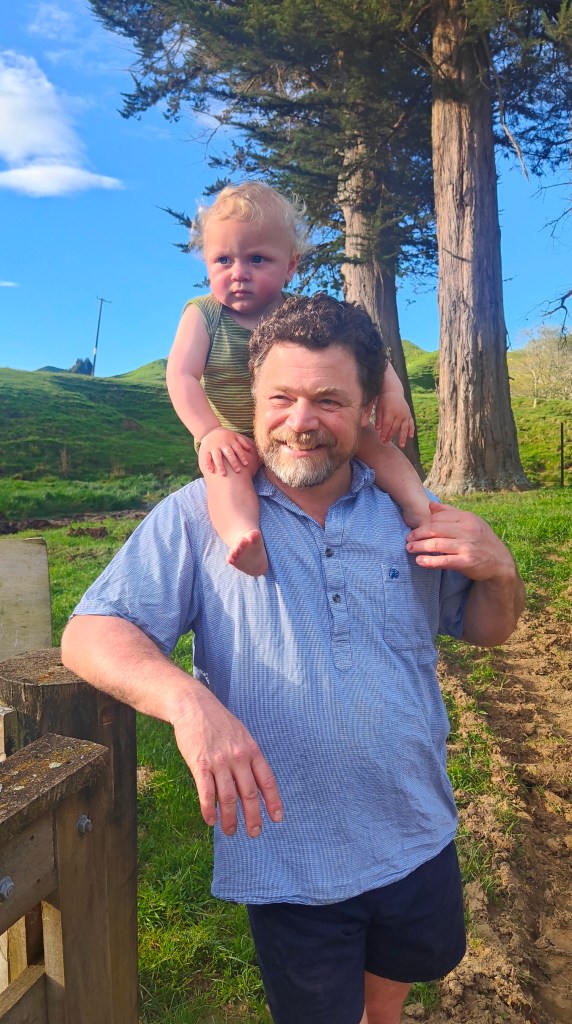
    It always makes me chuckle when I think of grandpa’s face lighting up at the sight of a bonny curly-headed toddler, as he says, “He’s been in a good paddock!” It is Jesus’ intent to put his sheep in a good paddock.

    “He’s been in a good paddock!”

    Jesus says in John 10:14 & 15; “I am the good shepherd; I know my sheep and my sheep know me – just as the Father knows me and I know the Father–and I lay down my life for the sheep.”

    Psalm 23 says;

    “The LORD is my shepherd, I shall not be in want. He makes me lie down in green pastures, He leads me beside quiet waters, He restores my soul. He guides me in paths of righteousness for His name’s sake.

    Even though I walk through the valley of the shadow of death, I will fear no evil, for you are with me; your rod and your staff, they comfort me. You prepare a table before me in the presence of my enemies. You anoint my head with oil; my cup overflows. Surely goodness and love will follow me all the days of my life, and I will dwell in the house of the LORD forever.”

    A successful church plant will likewise produce spiritual sons and daughters whose faces glow, as evidence that the good shepherd has indeed led them to good pasture (2 Corinthians 3:18).

    The main point of the four information meetings held last month was to discuss the importance of establishing clear boundaries, so that those who come will be able to truly feed on Christ. To talk about giving attention to detail, and establishing patterns of care, that can help to make this new church plant in 2026 a success.

    That means being genuinely willing to engage with and obey all of scripture – not just the bits that we like. That means taking seriously the need to articulate and defend good doctrine. And it means being willing to engage with the great confessions that have set out the core beliefs of the Christian faith, and helped the church go from strength to strength through the ages.

    Meeting Tuesday November 11, 7:30pm

    This Tuesday, November 11, at 7:30pm, I will be hosting another meeting at the Stratford A&P Showgrounds on Flint Road, in the old Skinner Road hall at the entrance to the showgrounds.

    The purpose of the meeting is to table a constitution that can be the 9-wire post and batten fence that this new church plant needs. A fence that can keep out the pests and protect the pasture. A fence that sets us up to be a church that can articulate and defend the whole counsel of God’s will we find in scripture. A fence that can help us to become the kind of church that is prescribed in the Bible: That glorious bride that our Lord Jesus plans to return for.

    Confessions and Fallibility

    Now, of course, this is no small task. All of the great confessions that guided the church through the ages have in some sense been established by one group of Christians in opposition to another group, arguing that their confession is more biblical.

    The Westminister Confession of 1646 is perhaps the greatest resource for theology and church discipline, apart from obviously scripture itself, in the English speaking world, and yet in Chapter 31 it says,

    “All synods or councils, since the Apostles’ times, whether general or particular, may err; and many have erred. Therefore they are not to be made the rule of faith, or practice; but to be used as a help in both.” (Article 31, Clause 4).

    Indeed, this must then also be true of the Westminster Assembly that produced this confession.

    But this fallibility is not a reason to reject or decry such confessions. It is a reminder that we must be diligent to engage confessions with another great rule of the Westminster, that when it comes to understanding the will of God revealed in the Bible, the infallible rule of interpretation of scripture is scripture itself (Article 1, Clause 9).

    Creating a Constitution

    This Tuesday I will be tabling a proposed constitution for this new church plant, based on the Westminister Confession, with a few amendments and exceptions.

    In the next few days I will put up some further posts and videos explaining a bit more about the Westminster Confession, and others like it. I’ll provide links and resources concerning these confessions. And I will outline and discuss some proposed amendments and exceptions, and the rationale behind doing so, with reference to global trends in this space.

    I will also discuss other aspects of forming a Constitution, such as providing for church membership and government structures, commitments that would be required for members, the establishment of clear processes for conflict resolution and discipline, and avenues for establishing a legal trust or incorporating a society to manage church affairs.

    With this new church plant, what we need to see in Stratford is a church where all who come are able to learn to know God’s word and apply all of God’s word to all of life. We need to have a church that doesn’t rely on just one leader, and doesn’t lean out to just one person’s biases and direction.

    We need a church where many people can be developed into mature Christians who know what it means to be faithful to all of scripture. Where many people are armed to understand God’s word and God’s will, so that they, too, can become the mature leaders that the church needs and that their families need.

    So please, do come back for the next post, and take this opportunity to learn more about what it might look like to take all of scripture as a foundation for life and for church.

    Up next:

    Part II: The Great Confessions of the Reformed Tradition

  • New church for Stratford in 2026

    October 2025

    Welcome to the website for the new Stratford church plant planned for 2026.

    Over the next few months, meetings will be held to advertise and promote plans for a new church plant for Stratford in the heart of Taranaki, to be established in January 2026.

    At this website you will find a prospectus (click here) outlining the drivers for the new church plant, the guiding principles that have been established to help chart the course, a proposed pattern for the life of the gathered church, and a timeline roadmap for those interested in learning more and, even better, getting involved.

    We are thankful for the enthusiasm and interest we are seeing along the way, and for the opportunity and sense of God’s leading to be taking this initiative. We look forward to playing our part in his plan to reveal his glory and to extend his gracious salvation to all who would repent and put their faith in Christ.

    Allan & Nia Chesswas